PPC can generate quick traffic but quick traffic does not necessarily mean quick cash. Lots of campaigns don’t make money because they’re designed around clicks rather than people who convert and clear goals. Here are some the best PPC advertising tips to guide your efforts.
Start With a Clear Campaign Goal
Determine the criteria you will use for success before writing ads or selecting keywords. Every objective requires its own configuration. Form submissions can be targeted in a lead generation campaign, or purchase value can be targeted in an ecommerce campaign. If you don’t know your campaign goals, then your campaign information is inconquerable, and it’s hard to enhance it.
Read more: What is PPC in digital marketing?
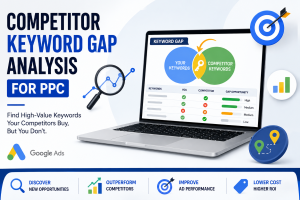
Choose Keywords Based on Intent, Not Just Volume
High volume keywords may be appealing, but they may attract a lot of general and costly traffic. Rather, prioritize search intent.
For example:
- “digital marketing” is broad
- “PPC services for small business” shows stronger buying intent
- “best Google Ads consultant near me” may indicate someone ready to take action
Include a combination of broad match, phrase match, and exact match keywords. Google explains that, as part of a strategy of close monitoring and robust conversion tracking, broad match setups can perform well alongside Smart Bidding.
Improve Your Landing Page Before Increasing Budget
One of the most frequent PPC pitfalls is crediting the ads for the failure to generate conversions. If users click but fail to convert, check the page experience.
Landing page best practices include:
- A clear headline
- Fast loading speed
- One main call to action
- Trust signals
- Simple form fields
- Content that matches the ad promise
Don’t send all campaigns to your homepage. A well written landing page typically will be more successful due to their focus.
Use Automation, But Do Not Go Fully Hands-Off
Automation can help with bidding, targeting and campaign optimization. Google’s Smart Bidding takes machine learning to the level of every bidding strategy it offers, such as Target CPA, Target ROAS, Maximize Conversions, or Maximize Conversion Value.
However, one thing cannot be underestimated: automation requires high-quality inputs. Effective tracking, strong ads, and clear objectives will yield comparable results sooner. When using ppc automation tools, monitor performance frequently and do not adjust budgets too drastically.
Write Ads That Match the Searcher’s Problem
Great PPC ads don’t rely on clever insights. They are specific.
Do not write ‘Best Marketing Services’ but give the problem or result. For instance, “Get More Qualified Leads With Google Ads” is more clear and helpful.
Good ads typically contain:
- The main keyword
- A clear benefit
- A reason to trust you
- A direct call to action
However, responsive search ads tend to perform better when you offer a variety of headlines and descriptions instead of restating the same concept in different terms.
Track the Right Metrics
While clicks are important, they’re not all that counts. A campaign that has a decent click-through rate doesn’t have to perform poorly because the click-throughs fail to convert.
These are key to keep an eye on:
- Cost per conversion
- Conversion rate
- Return on ad spend
- Search terms
- Impression share
- Landing page performance
Another comparison you might wish to make prior to investing in paid marketing is seo vs ppc. PPC is quick, whereas SEO can create a long-lasting visibility.
Know When to Get Expert Help
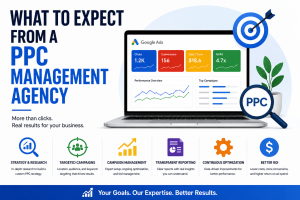
When your account is consuming your funds and not generating returns, you may want to look for a PPC agency near me. A good agency will talk about strategy clearly, provide an honest report and talk about profitability, not vanity metrics.
The Bottom Line
The best PPC advertising tips are not tricks. They are a matter of clarity, testing and control. Set clear objectives, find the right keywords, optimize your landing page, and apply automation judiciously.
If managed properly, PPC transforms from paid traffic to a more than paid traffic. It turns into something measurable which is meant to accomplish the proper individuals at the proper time.