SEO vs PPC: Which Digital Marketing Strategy is Right for Your Business?
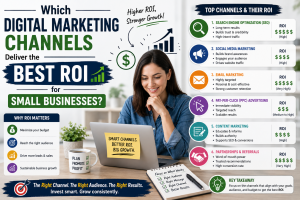
Businesses have two main choices in the fast-paced world of digital marketing. One choice limits marketing to natural or organic growth, and the other restricts it to immediate artificial growth. The former is SEO services, and the latter is PPC. Before investing in these marketing techniques, we should understand these strategies deeply. To get maximum ROI, the Strengths, limitations, and ideal use should be known to all the business owners.
What is SEO?
Search Engine Optimization (SEO) is a set of strategies and practices in which optimization is the key process. This method improves rankings and visibility.
Key Benefits of SEO:
Is seo worth it? Yes, due to these benefits, it has worth.
- Cost-effective long-term traffic:
The most striking benefit of this strategy is its cost-effectiveness. It generates revenue slowly. It does not require payment for every click.
- Credibility & trust:
It enjoys high credibility. Users respect and build trust in the site if it has adopted a long, natural course for gaining ranking and visibility. Users often ignore paid ads.
- Sustainable growth
This strategy builds authority in the long run. It constantly enhances the digital footprint.
Challenges:
- Takes time:
It is time-consuming. It is a marathon model.
- Ongoing effort required:
It is a consistent process. Continuous optimization is a regular task. Site needs to be updated, backlinks and technical optimization, etc.
What is PPC?
What is PPC in digital marketing? Pay-Per-Click (PPC) is a marketing channel. Businesses pay for ads that appear on different platforms. The platform charges you for every click on your ad. For better results, ads must be managed through a PPC management strategy.
Key Benefits of PPC:
PPC campaign optimization yields the following:
- Immediate results:
Results begin to appear as soon as the ad runs. Ads begin driving traffic from the point of their launch.
- Highly targeted:
Platforms provide multiple options. For example, highly targeted keywords and location. Other factors for an ad campaign include demographics and device.
- Measurable ROI:
The most impressive feature of this marketing method is that everything is based on data. Data provides a clear picture of ROI. This feature helps in decision-making.
Challenges:
- Costs can add up:
Highly competitive keywords are often expensive.
- Temporary:
As an immediate opening brings traffic, conversely, closing stops traffic immediately.
- Requires expertise:
Without optimization and expert handling, this campaign wastes resources without any checks in place. Mismanagement in PPC engulfs the budget.
SEO vs PPC: Head-to-Head Comparison
| Factor | SEO | PPC |
| Speed of Results | Slow (months) | Immediate |
| Cost | Lower long-term | Pay per click, can be high |
| Credibility | High (organic trust) | Lower (ad fatigue) |
| Sustainability | Long-lasting | Temporary |
| Targeting Options | Limited to search intent | Advanced demographic targeting |
| Maintenance | Ongoing optimization | Ongoing budget & adjustments |
When to Choose SEO vs PPC
- SEO is ideal if:
It is an ideal strategy for long-term growth. It earns credibility. Further, it is cost-effective. It yields the best results based on content quality.
- PPC is ideal if:
It is a fast-track marketing method. Immediate result right after the launch. It offers many modifications to the campaign. It targets a specific audience. It is the best for business promotions and lead generation.
- Best Approach:
Experts in the digital marketing world suggest a combo approach. This approach is enshrined on both pedestals. It combines SEO and PPC strategies. This edges immediate visibility. In the meantime, SEO improves the website’s ranking and traffic.
Turn Traffic into Leads
To improve your online presence, you can request a free website audit today. Pervasive Marketing has tailored strategies for your business. Our tailored SEO and PPC strategies can drive leads and conversions for your website.