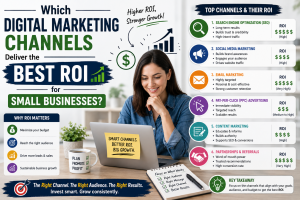
For small businesses, every marketing dollar matters. Unlike large corporations with extensive budgets, small business owners need strategies that generate measurable results without overspending. The challenge isn’t finding marketing channels—it’s identifying the ones that consistently deliver the highest return on investment (ROI).
Digital marketing offers countless opportunities, but not every platform or strategy is equally effective. Some channels produce quick leads, while others build long-term brand authority and sustainable growth. Understanding where to focus your efforts can help you attract more customers, increase sales, and maximize your marketing budget.
In this guide, we’ll explore the digital marketing channels that deliver the best ROI for small businesses and explain how to choose the right mix for your goals.
What Does ROI Mean in Digital Marketing?
ROI (Return on Investment) measures how much revenue your marketing efforts generate compared to what you spend.
The basic formula is:
ROI = (Revenue – Marketing Cost) ÷ Marketing Cost × 100
For example:
- Marketing Spend: $1,000
- Revenue Generated: $5,000
ROI = 400%
A high ROI means your marketing investment is generating profitable results.
1. Search Engine Optimization (SEO)
SEO consistently provides one of the highest long-term ROIs for small businesses.
Instead of paying for every visitor, SEO helps your website rank organically on search engines like Google. Once your pages begin ranking, they continue attracting qualified visitors without ongoing advertising costs.
Why SEO Delivers High ROI
- Generates consistent organic traffic
- Builds long-term visibility
- Creates trust and credibility
- Lowers customer acquisition costs over time
- Supports every stage of the customer journey
For example, a local plumbing company ranking for “emergency plumber near me” may receive qualified leads every week without paying per click.
Best SEO Strategies
- Keyword research
- On-page optimization
- Technical SEO
- Internal linking
- Local SEO
- Quality content creation
- Link building
SEO requires patience, but its long-term value is difficult to match.
2. Email Marketing
Email marketing continues to deliver one of the highest ROIs across all digital channels.
Unlike social media, you own your email list, giving you direct access to your audience whenever you need it.
Benefits
- Low operating costs
- Personalized communication
- High conversion rates
- Excellent customer retention
- Easy automation
Businesses can use email for:
- Welcome sequences
- Promotions
- Product launches
- Customer education
- Cart abandonment reminders
- Newsletters
Growing your email list should be a priority for every small business.
3. Local SEO
If your customers are located within a specific city or region, Local SEO may produce the fastest ROI.
People searching for businesses nearby often have high buying intent.
Examples include:
- Dentist near me
- HVAC company
- Coffee shop nearby
- Roofing contractor
Optimizing your Google Business Profile, collecting reviews, and maintaining accurate business information can significantly increase local visibility.
Local SEO Checklist
- Optimize Google Business Profile
- Build local citations
- Encourage customer reviews
- Add local keywords
- Create location pages
- Improve website speed
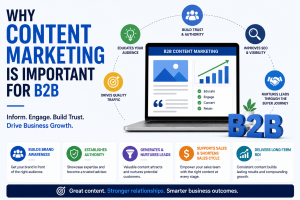
4. Content Marketing
Content marketing builds trust before customers make purchasing decisions.
Instead of selling immediately, valuable content educates potential buyers and positions your business as an authority.
Popular content includes:
- Blog articles
- How-to guides
- Case studies
- Videos
- FAQs
- Infographics
One high-quality article can continue generating traffic and leads for years.
Content marketing also strengthens SEO by targeting informational search queries.
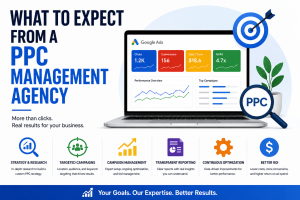
5. Google Ads (PPC)
While SEO takes time, Google Ads can produce immediate traffic.
Businesses bid on keywords and appear at the top of search results.
Benefits
- Instant visibility
- Highly targeted audiences
- Flexible budgets
- Detailed performance tracking
- Fast lead generation
Google Ads works especially well for:
- Emergency services
- Local businesses
- E-commerce
- High-value services
The key is targeting commercial-intent keywords rather than broad searches.
6. Social Media Marketing
Social media ROI varies depending on your audience and industry.
Rather than trying to dominate every platform, focus on where your customers spend their time.
Best Platforms
Great for:
- Local businesses
- Community engagement
- Advertising
Ideal for:
- Fashion
- Beauty
- Food
- Lifestyle brands
Perfect for:
- B2B businesses
- Professional services
- Recruitment
TikTok
Excellent for:
- Younger audiences
- Short-form educational videos
- Brand awareness
Organic social media supports brand visibility, while paid social campaigns can generate leads and sales.
7. Pay-Per-Click Advertising on Social Platforms
Facebook Ads and Instagram Ads allow businesses to target users based on:
- Interests
- Behaviors
- Location
- Demographics
- Previous website visits
Retargeting campaigns often deliver excellent ROI because they reach users who have already interacted with your business.
8. Video Marketing
Video has become one of the most engaging forms of digital content.
Businesses can create:
- Product demonstrations
- Tutorials
- Customer testimonials
- Behind-the-scenes videos
- Educational content
Videos improve engagement across websites, YouTube, and social media platforms.
Even simple smartphone videos can outperform expensive productions if they provide value.
9. Referral Marketing
Satisfied customers can become your most effective marketing channel.
Referral programs encourage existing customers to recommend your business to friends and family.
Benefits include:
- Lower acquisition costs
- Higher trust
- Better conversion rates
- Increased customer loyalty
Offering discounts or rewards often motivates customers to refer others.
10. SMS Marketing
SMS marketing delivers exceptionally high open rates.
Businesses commonly use text messages for:
- Appointment reminders
- Promotions
- Flash sales
- Order updates
- Event notifications
Because text messages are typically read within minutes, SMS works well for time-sensitive campaigns.
Comparing Digital Marketing ROI
| Marketing Channel | Initial Cost | Long-Term ROI | Speed of Results |
|---|---|---|---|
| SEO | Medium | Excellent | Medium to Long |
| Email Marketing | Low | Excellent | Fast |
| Local SEO | Low | Excellent | Medium |
| Content Marketing | Medium | Excellent | Long |
| Google Ads | Medium-High | Good | Immediate |
| Social Media | Low | Moderate | Medium |
| Paid Social Ads | Medium | Good | Fast |
| Video Marketing | Medium | High | Medium |
| Referral Marketing | Low | Excellent | Medium |
| SMS Marketing | Low | High | Immediate |
Choosing the Right Channels for Your Business
Not every business should invest equally in every marketing channel.
Service-Based Businesses
Prioritize:
- SEO
- Local SEO
- Google Ads
- Email Marketing
E-commerce Stores
Focus on:
- SEO
- Google Shopping Ads
- Email Marketing
- Social Media Advertising
- Content Marketing
B2B Companies
Invest in:
- LinkedIn Marketing
- SEO
- Content Marketing
- Email Campaigns
Local Businesses
Concentrate on:
- Google Business Profile
- Local SEO
- Reviews
- Google Ads
- Facebook Marketing
Common Mistakes That Reduce ROI
Many small businesses waste money by making avoidable mistakes, such as:
- Trying every marketing platform at once
- Ignoring analytics and conversion tracking
- Failing to optimize landing pages
- Publishing inconsistent content
- Neglecting customer retention
- Running ads without clear targeting
- Not investing in SEO for long-term growth
A focused strategy almost always outperforms spreading your budget too thin.
How to Measure Marketing ROI
Track performance using key metrics such as:
- Website traffic
- Conversion rate
- Cost per lead
- Customer acquisition cost (CAC)
- Customer lifetime value (CLV)
- Email open rates
- Click-through rates
- Return on ad spend (ROAS)
- Organic keyword rankings
Regular reporting helps you identify which channels deserve additional investment.
Frequently Asked Questions
Which digital marketing channel has the highest ROI?
For most small businesses, SEO and email marketing consistently deliver the highest long-term ROI. SEO attracts organic traffic over time, while email marketing drives repeat sales and customer retention at a relatively low cost.
Is SEO better than paid advertising?
SEO provides sustainable, long-term growth, whereas paid advertising generates immediate traffic. Many successful businesses combine both strategies—using ads for quick results while building SEO for ongoing visibility.
How much should a small business spend on digital marketing?
Budgets vary by industry, but many small businesses invest 5% to 10% of their revenue in marketing. Start with the channels that best match your goals, then increase spending on those that deliver measurable returns.
Which social media platform is best for small businesses?
The ideal platform depends on your audience. Facebook works well for local businesses, Instagram suits visual brands, LinkedIn is effective for B2B companies, and TikTok can help businesses reach younger consumers.
How long does SEO take to deliver ROI?
SEO typically takes 3–6 months to show meaningful improvements, though competitive industries may require more time. Once rankings improve, SEO can generate consistent traffic and leads with lower ongoing costs than paid advertising.
Final Thoughts
The best digital marketing channels for small businesses depend on your goals, audience, and budget, but SEO, email marketing, local SEO, content marketing, and Google Ads consistently rank among the strongest performers for ROI. Rather than spreading resources across every available platform, focus on the channels that align with your business objectives and measure results regularly.
A balanced strategy that combines long-term tactics like SEO and content marketing with faster channels such as PPC and email campaigns can help you generate steady traffic, qualified leads, and sustainable growth. As your business evolves, continue testing, refining, and investing in the channels that produce the greatest return.