Patients rarely do not search; therefore, doctors do not struggle often. The problem is most often that paid advertising, website content, and local search strategies are all going to be separate. All three can be linked together with a solid healthcare digital marketing strategy, making it easy for a practice to draw in the right kind of search, communicate in a way that resonates with their audience, and generate lead enquiries to bookings.
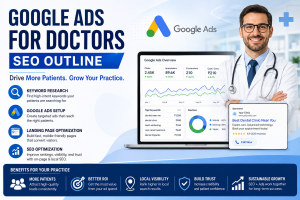
Here is the Google Ads for Doctors SEO Outline: A Practical 2026 Plan designed for doctors, clinic owners, practice managers, and healthcare marketers who want a comprehensive and actionable framework and don’t want random marketing tips.
Google Ads for Doctors SEO Outline: Core Sections
1. Define the Patient and Search Intent
Start with the condition, service, location, and action the patient is likely to search. “Dermatologist” is broad, while “same-week dermatologist appointment in Miami” shows stronger local and booking intent.
Build separate keyword groups for:
- Specialty and provider searches
- Symptoms or conditions, where advertising policies permit
- Procedures and treatments
- “Near me” and city-based searches
- Insurance, availability, and appointment queries
Avoid combining unrelated services in one ad group. Google recommends matching ad language closely to search intent and keeping the landing-page message consistent with the advertisement. These factors influence ad relevance and landing-page experience.
Read more: Will ai replace seo in 2026?
2. Create Service-Specific Landing Pages
Each major campaign should send visitors to the most relevant page—not automatically to the homepage. A useful doctor landing page should include the physician’s credentials, services offered, location, appointment options, insurance information, patient expectations, and clear contact details.
For SEO, the page should also answer genuine patient questions, such as treatment suitability, preparation, recovery, cost factors, and when urgent care may be necessary. Google’s Search guidance prioritizes original, reliable, people-first content rather than pages created mainly to manipulate rankings.
3. Check Healthcare Advertising Restrictions
Medical advertising rules vary by service and country. Prescription drug services, online pharmacies, telemedicine, addiction services, and certain treatment-related terms may require certification or face location-specific restrictions.
Review Google’s Healthcare and Medicines policy before selecting keywords, writing advertisements, or publishing landing pages.
Read more: How to get featured in AI search results?
4. Track Meaningful Conversions Carefully
Measure appointment forms, qualified phone calls, online bookings, and direction requests—not just clicks. Google Ads conversion tracking can help identify which advertisements and keywords produce valuable actions.
More attention is needed when it comes to tracking health. Those practices covered by HIPAA should evaluate whether tracking technologies could reveal PHI and solicit expert advice to determine compliance status before adding advertising tags to the sensitive pages.
5. Review and Improve Monthly
Monitor search terms, negative keywords, CQLs, missed calls, landing page conversion rates, and appointments booked. If a campaign isn’t bringing in clicks at a low cost and good patient volume, it isn’t effective.
Get a detailed understanding on seo vs geo here!
The Bottom Line
The top Google Ads for doctors SEO outline connects links, search intent, good compliance with ads, targeting landing pages, local relevance, and privacy-respectful measurement. The structure is repeatable and offers medical practices a planning framework for using it, but each practice should customize it to its practice’s regulations, location, specialty, and patient-booking process.
Start with a single high-value service and monitor results in real time, adding more services if there is evidence that they work well.
Read more: How to rank content in chatgpt search results?